In this post, I would like to discuss one of the main challenges and turning points I encountered during the project. As mentioned in the previous post, as I continued translating more and more strings, I began to encounter texts that were significantly more complex. Some of them contained reserved words, longer descriptions, or specific terms whose meaning was not immediately clear within the context of the translation.
To overcome these challenges, I relied on several resources. I used translation tools, consulted WordPress’s AI-assisted suggestions to better understand the intended context, and reviewed translations available in other languages within the WordPress platform. These references helped me gain a clearer understanding of how certain terms and phrases should be translated while maintaining consistency with the project’s standards.
As a result, whenever I encountered a translation that was more difficult to interpret, I was able to resolve it by researching the context, comparing available references, and determining the most appropriate wording based on the purpose of the text. This process not only helped me complete the translations accurately but also improved my understanding of localization practices within WordPress.
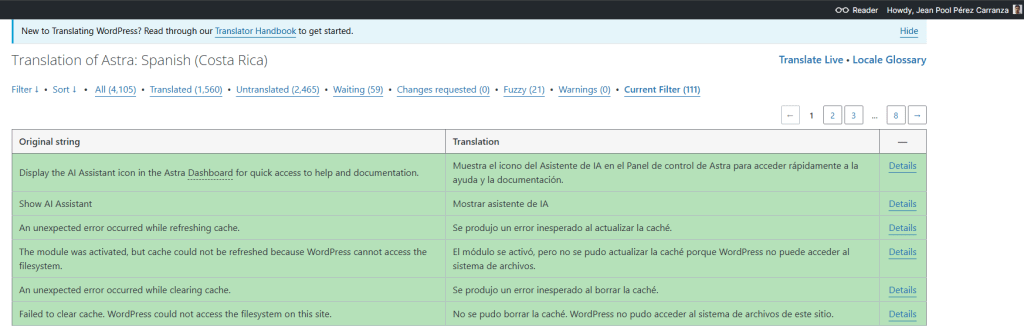
Additionally, I have attached an image showing the first five translations that were approved. At that stage, the translations were still relatively straightforward, although the text strings were beginning to become longer and more detailed than those I had worked on initially.


Leave a Reply